|
Jeongin Kim
she / her
Hello! My name is Jeongin Kim and I am an integrated MS-PhD student at Ewha Womans University, advised by Professor Junhyug Noh. As a member of the Practical AI Lab (PAI Lab), my research focuses on developing reliable and annotation-efficient learning methods for semantic segmentation, with a particular emphasis on active learning and weakly-/semi-supervised learning. Annotation efficiency is critical for bringing segmentation systems into real-world use, as pixel-level labels are costly and labor-intensive to obtain. Currently, I focus on how foundation models can be turned into reliable sources of training signal, enabling segmentation to scale in the low-budget regime. |

|
|
Publications
|
|
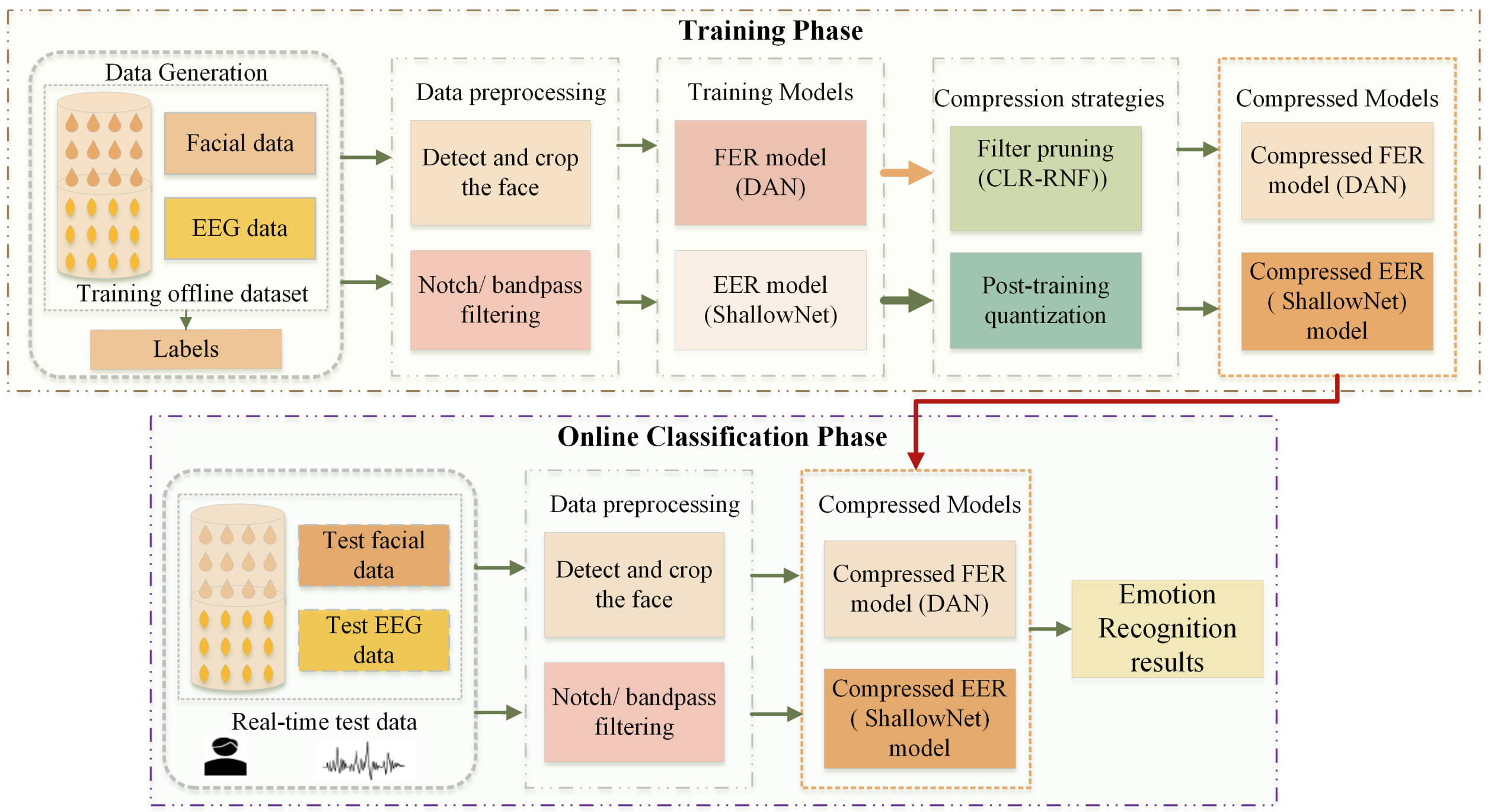
Emotion-Aware Multimodal Lightweight Framework for Adaptive Voice Interaction on Edge Device
Van-Duc Khuat, Jeongin Kim, Sang-Ho Kim, Yue Cao, Martin Maier, Wansu Lim In Knowledge-Based Systems, 2026. article A lightweight multimodal framework for emotion-aware voice interaction on edge devices, integrating EEG and facial-expression signals with model compression to support adaptive and efficient on-device responses. |
|
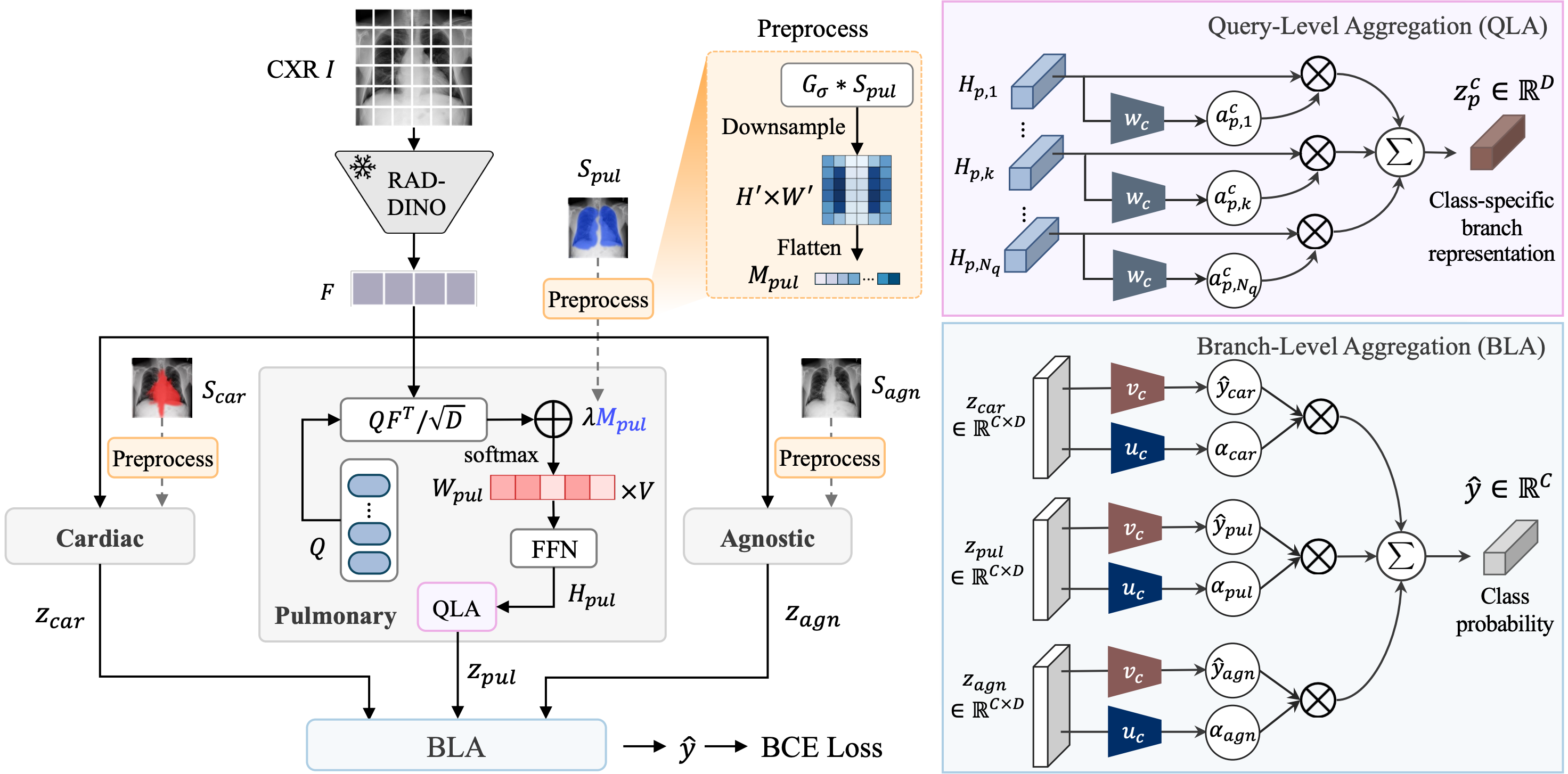
Anatomy-Structured Hierarchical MIL for Weakly-Supervised Thoracic Disease Detection in Chest X-rays
Jeongin Kim, Sohyun Ahn, Seo Young Kang, JaeYi Sung, Soomin Kim, Sungho Cho, Rena Lee, Kwanchang Kim†, Junhyug Noh† In Proceedings of the International Conference on Medical Image Computing and Computer Assisted Intervention (MICCAI), 2026. article project page code press † Co-corresponding authors ASH-MIL is a weakly-supervised framework for thoracic disease detection in chest X-rays that combines parallel anatomy-structured branches with hierarchical MIL, injecting anatomical priors into decoder cross-attention to enable anatomically grounded localization without bounding box supervision. |
|
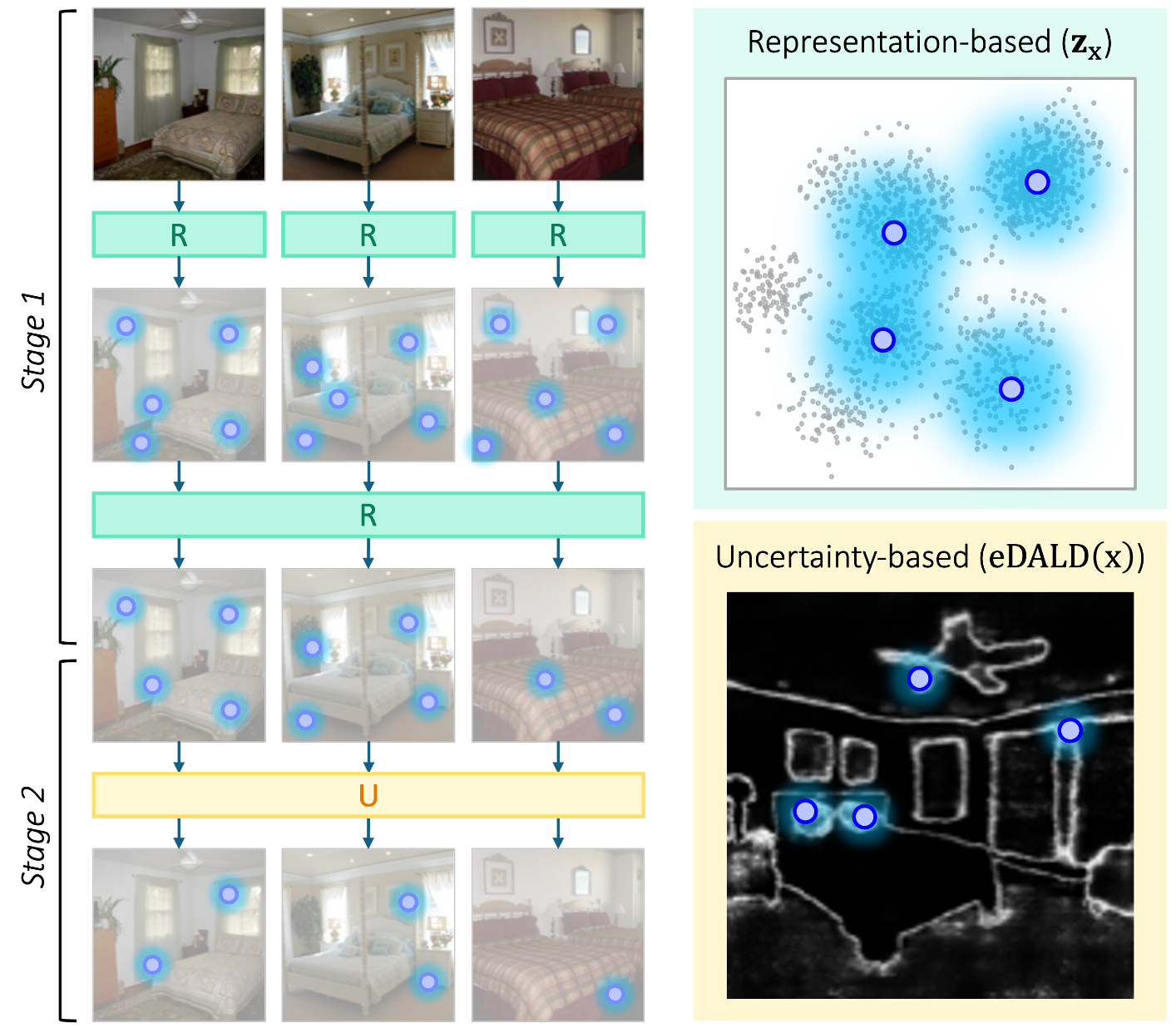
Diffusion-Driven Two-Stage Active Learning for Low-Budget Semantic Segmentation
Jeongin Kim, Wonho Bae, YouLee Han, Giyeong Oh, Youngjae Yu, Danica J. Sutherland, Junhyug Noh In Advances in Neural Information Processing Systems (NeurIPS), 2025. article code We propose a two-stage active learning pipeline for semantic segmentation under extremely low labeling budgets, which leverages a pre-trained diffusion model for diverse feature extraction and introduces an uncertainty score to select the most informative pixels for annotation. |
|
This page is a fork of Jon Barron's. |